
You can live in a Roman Emperor’s palace…
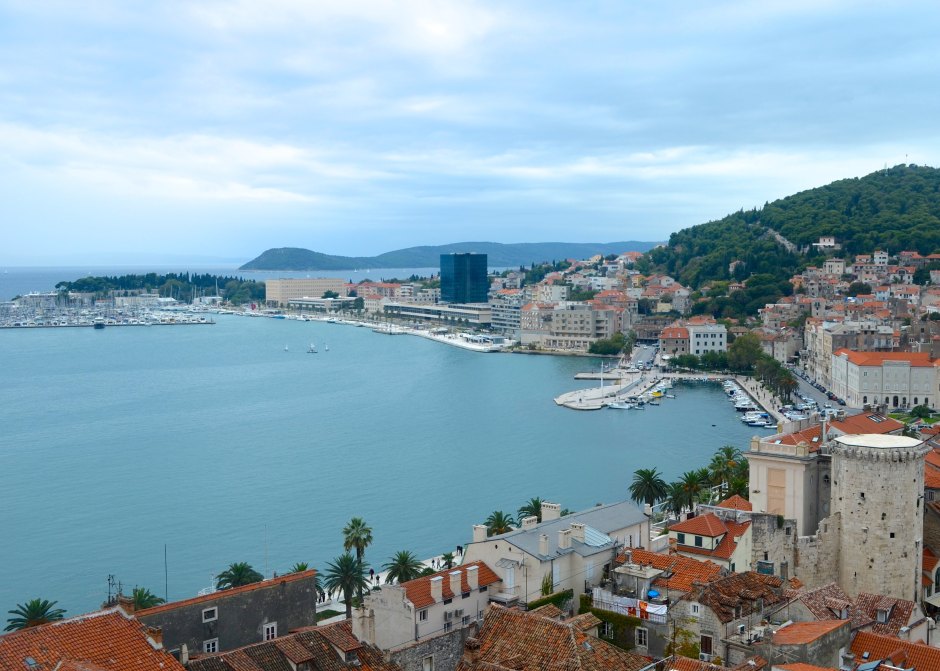
Work-life balance is not a new concept. Even rulers yearned for ‘me-time’. For proof, look no further than Croatia. 1700 years ago Roman emperor Diocletian pre-planned his retirement and invested 10 years in creating a humungous 7-acre villa in Split (the Latin word spalatum means palace). Prime real estate by all standards…warm glow of the Mediterranean sun, Adriatic waves lapping at the backdoor, open terraces and ornate balconies to take in the fresh sea air. It is said that there used to be a three-week quarantine for anyone who entered Split…there was no place for disease or infection in this idyllic abode. Respect!
Diocletian’s ancient walled city, is now a UNESCO-protected World Heritage Site, and an enticing Mediterranean destination. Go live inside the Palace complex and bask in the false pretence of being a royal guest. Just 220 buildings and 3,000 residents now, where 9000 lived in Diocletian’s time…elbow room aplenty. Be privy to the harmony of the limestone buildings, cozy squares, quiet cafes, delightful shops and understated boutique hotels scattered around. Beaming at the prospect of walking those shiny-smooth stone streets, aren’t you?

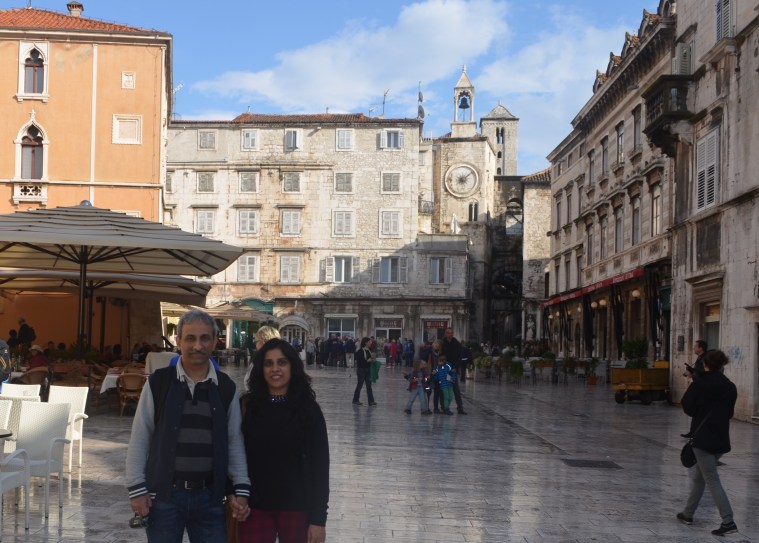
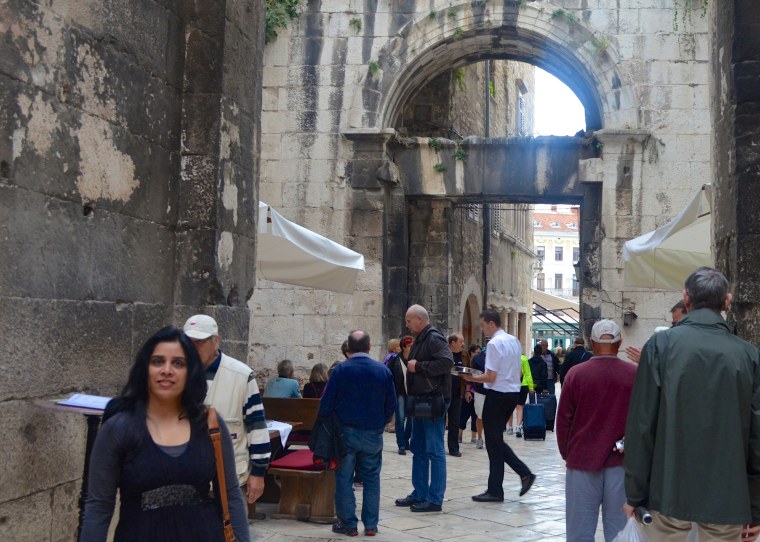
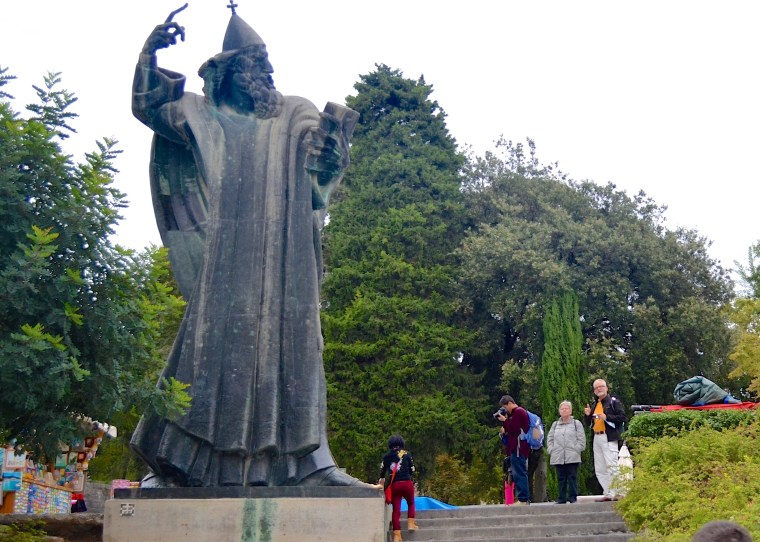
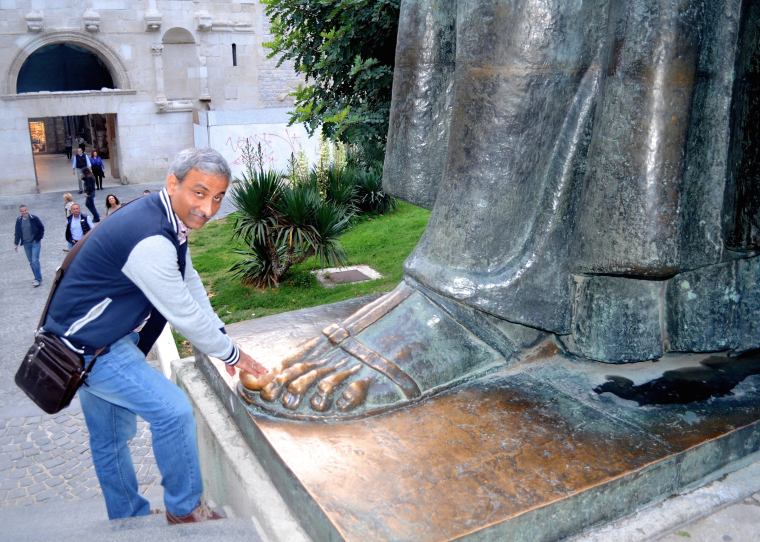
But first, peel your eyes away from Riva, Europe’s most stunning promenade. That white stone-paved, horseshoe-shaped bay lined with neatly arranged palm trees, dotted with seafront cafes under rows of pristine white sunshades, speckled with docked sail boats and framed by the glamorous backdrop of the centuries-old Roman palace walls. Linger in the lovely People’s Square (Narodni Trg), home to the former City Hall. Admire the countless elegant Renaissance, Baroque and Gothic-styled family palaces built by Venetian artisans for aristocratic families. Interpret the symbols of social status (animals, birds and mythological creatures) displayed on the family coat of arms outside the mansions. Squeeze into the world’s smallest church, 6th-century St. Martin’s, built inside a minuscule 5-meters wide guard passage above the Golden Gate. And make a wish by rubbing the shiny big toe of Ivan Mestrovic’s imposing statue of 10th-century Croatian bishop Gregory Nin.


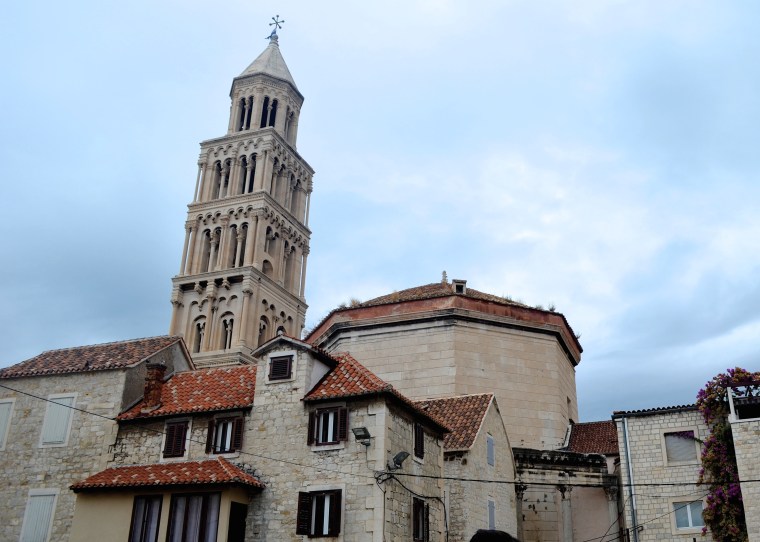
Then head to the epicentre, Peristil, a large imperial square, constantly humming and buzzing with people. Hogging the limelight is the grand St.Domnius cathedral with a bell tower. To its left, touching it like a massive annexe, is an octagonal structure, Diocletian’s mausoleum…its eight sides symbolising eternity. The structure has been almost completely preserved, except for the domed ceiling, which has lost its glittering mosaics. So, the Emperor does live on! Wait, a wedding has just taken place and outside the cathedral, guests are singing celebratory songs in abandon, showering flowers on the blushing bride and the groom and lighting signal flares. Cheer along!


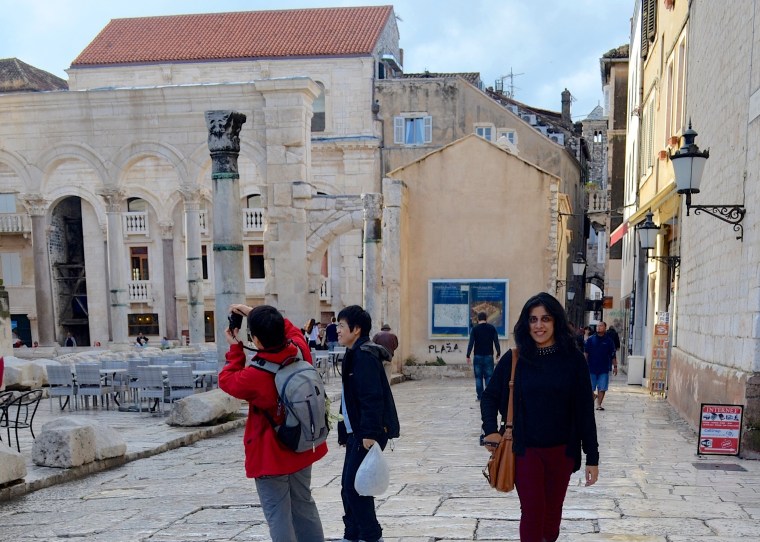
The 27-meter long and 13.5-meter wide Peristil is framed by two colonnades, lined with six huge red granite Corinthian columns. Diocletian’s loot from Egypt. Three on either side are reddish-purple, while the rest are white…these colours once marked the boundaries between commoners and royalty. Purple was the rarest of colors, prepared by boiling thousands of marine snails in giant lead vats for days. Anyone besides the imperial family caught in purple attire could be beheaded in those days. So, if you cannot lie without violets and lavenders in your wardrobe, be thankful that you weren’t born in Diocletian’s era.



Diocletian brought back 13 black Egyptian sphinxes from the Pharaoh Thutmose III’s tomb to Split, but only three remain. One old black Egyptian sphinx stands guard at the gateway of the cathedral. The second headless one is outside the Temple of Jupiter opposite his mausoleum, down the narrowest lane in the world. Both are there’re 3500-years old!


At the head of Peristil, to the south, tread a flight of wide steps, leading to a large circular stone-tiled space, the Vestibule. Inspired by the Pentagon in Rome, maybe? Pan from massive pool of sunlight on the irregular mosaic patterned floor to the ceiling to the perfectly circular gaping hole, providing clear views to the brilliant blue sky above. There would have been a huge cupola here, covered in mosaic and marble. The Roman emperor, a self-proclaimed Sun God would enter the Vestibule from his imperial quarters daily around 12 noon, and greet the cheering crowds eagerly waiting at the Peristil. This ritual is enacted even today, during summer months by actors. A young boy testing out Vestibule’s acoustic design by calling his ‘mommy’, is hustled away just in time for the live vocal performance by a group of five singers in black suits, white shirts and red cummerbunds. For the next 10 minutes, lose yourself in the chorus of the traditional Dalmatian songs echoing in the circular auditorium.
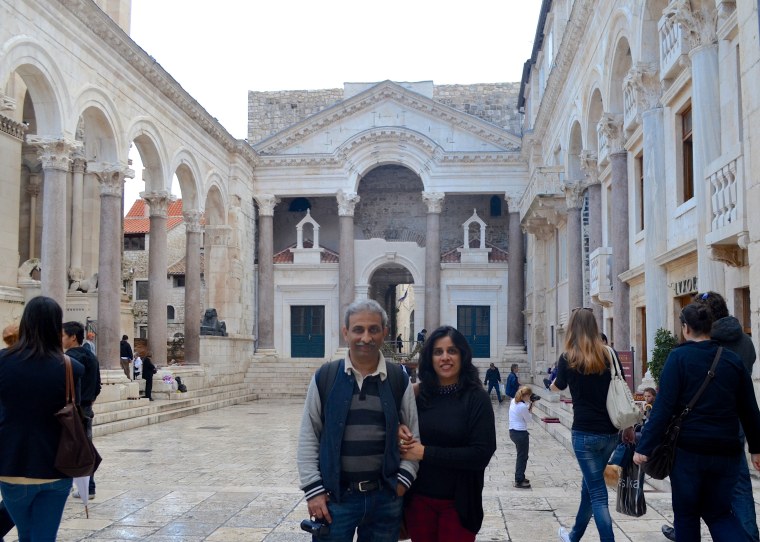


Opposite the cathedral, at the classy Luxor café, earlier part of the Cipci Palace, gaze at the glorious remnants of the imperial palace on its walls and floor. A marble circle on the floor indicates the spot where the base of the Temple of Venus had been. Exposed walls and the ceiling murals reveal unadulterated history. Outside the cafe, squat on the red cushions scattered on the steps of the Peristil, order coffee and cake and roll back into the 4th century. If you were guests of the Roman emperors during one of his royal feasts, and this was his dining room, you would probably be sampling 25 or more exotic dishes reclining languorously on your right side, using your left hands to gobble down the food. Close enough!


Venture into the Cathedral, to gape at its intricately domed interior and check out the 57-meter belfry towering high above the palace for gorgeous views. A sea of roofs…all red-tiled, some newer and brighter red, others older, brown and discoloured, some curved and bent with the weight of time. Crumbly houses cluttered so close together, randomly hung electricity cables, TV aerials, dish antennas and solar heaters fighting for space. Poor Diocletian would be turning in his grave…or what’s left of it!

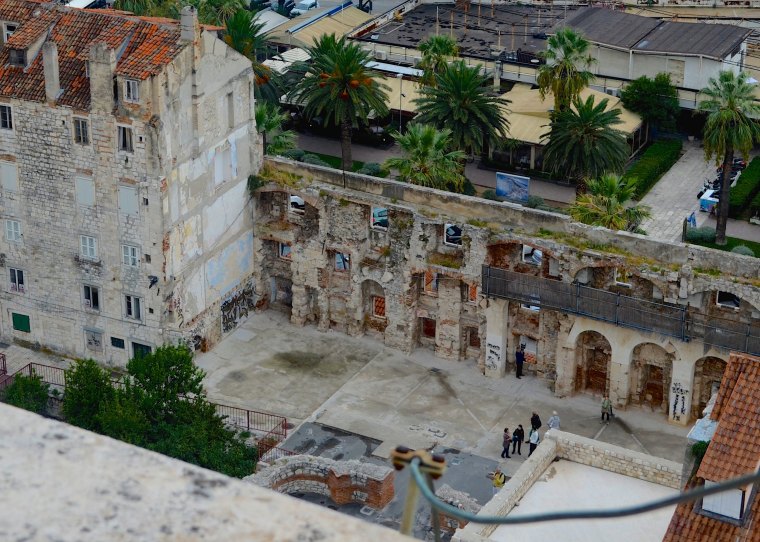
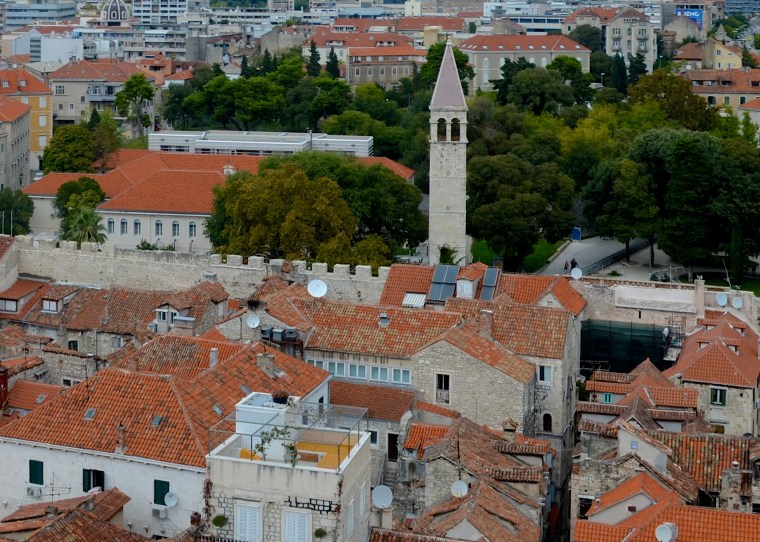

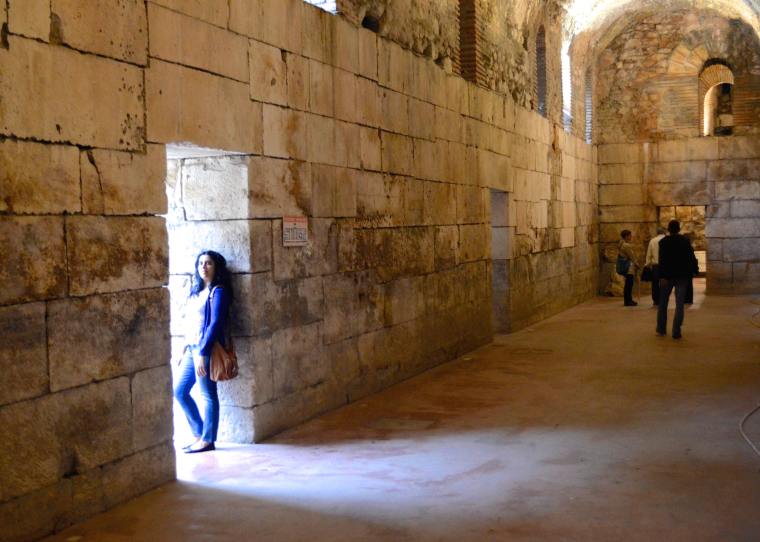
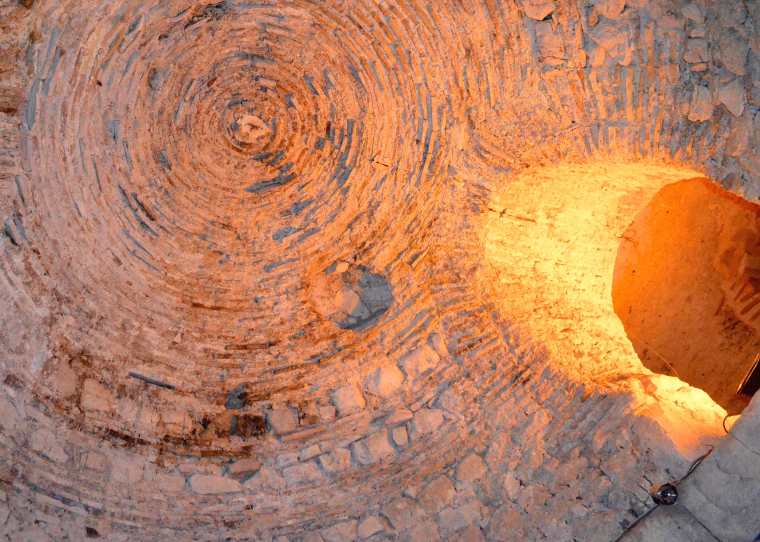
For a fee of 10 kunas, explore the underground cellars which mirror the layout above…since most of the palace was in ruins, how can you let that go? Diocletian had built the basements to raise the level of the entire palace complex, so that he could enjoy the sea view better. Heights of extravaganza! The huge labyrinthine halls were once used to store foodstuffs, make wine and press olives. It is a strange feeling to know that once the sea used to reach the very walls of the palace, and boats berthed in front of the gate to drop off supplies or receive noble guests.

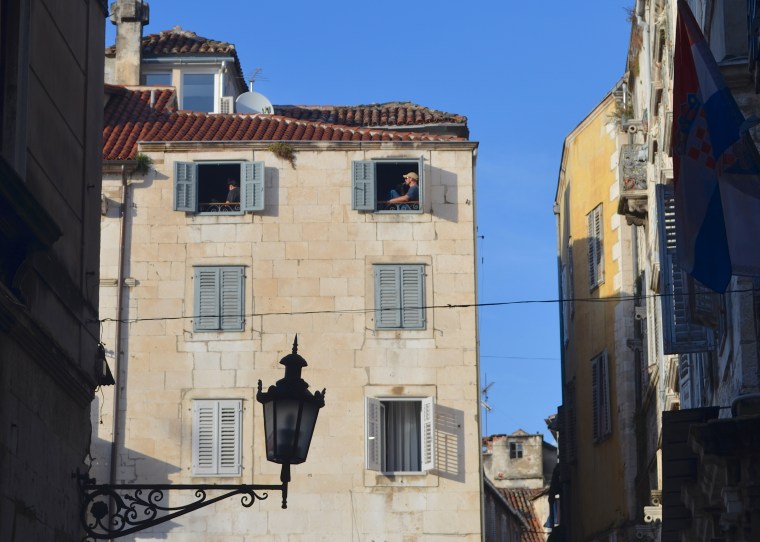
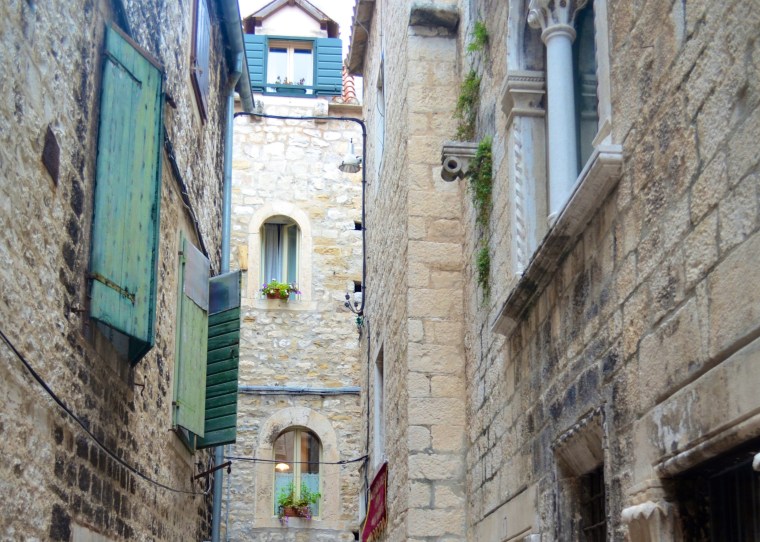
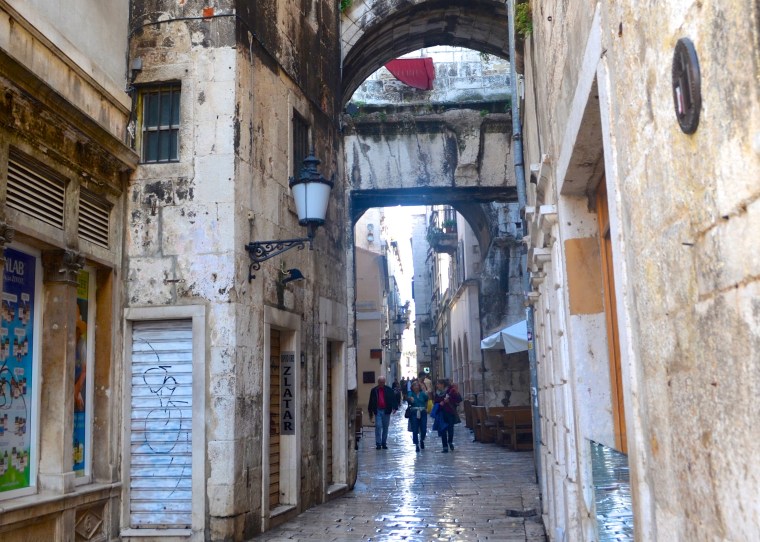
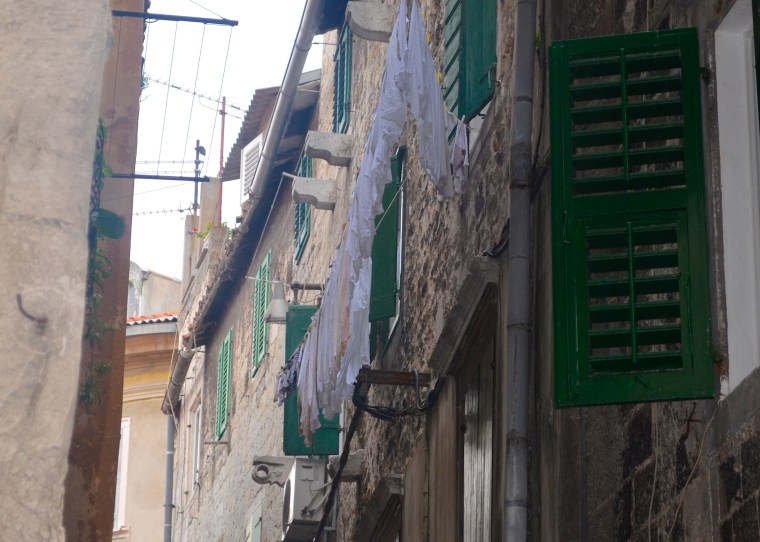
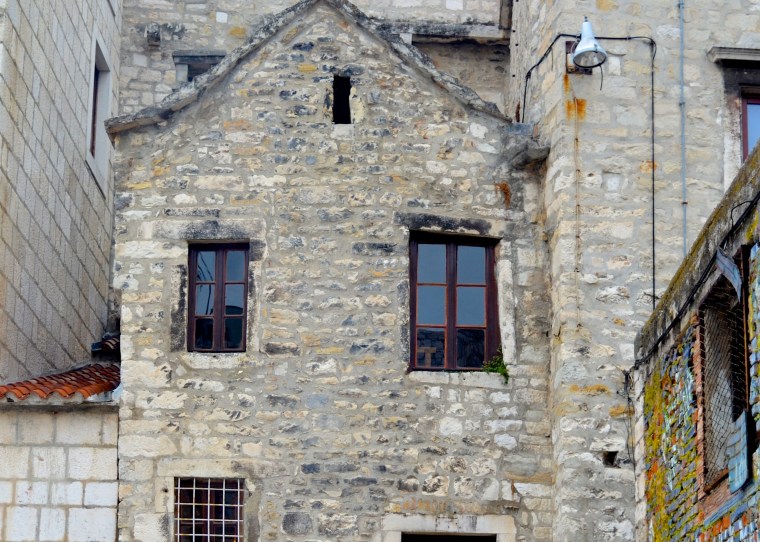
When night falls, rain drops go pitter-patter over wooden benches and red canopies of the case in alley ways. Waiters hang around, waiting for diners, chatting. Cheerful sounds of laughter echo from a far end of a quiet alley. What is it like having a home in a neighbourhood strewn with ancient Roman leftovers? Knowing that the doorway to your house has a marble pedestal which is the top slice of a marble column from the 4th century? Is it possible to ever have an uneventful day living within a palace? Where laundry dries on makeshift clothes lines across the narrow lanes, grannies watch the action in the squares from the shuttered windows of their cream stone houses. Where motifs in Greek and Roman art decorate the doors, bistros show-off ancient exposed brickwork on their walls, ordinary homes are adorned with ornate balconies, carved doorways and graceful venetian windows. Where centuries old graffiti is inscribed on nondescript walls, laced borders carved into limestone provide unexpected relief, and water trickles out of a lion head fountain where they pick their daily bread.


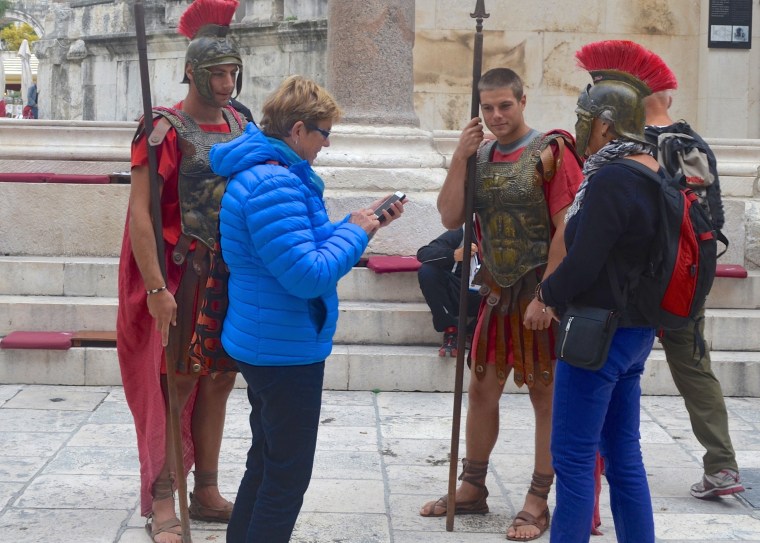
So when you tread the streets late that night, chances are you may hallucinate. Is that a bunch of solemn-faced toga-clad Romans stationed at the columns beneath the balcony where Diocletian and his queen sometimes surveyed the inky-dark Adriatic waters? After all, the Emperor is resting.
Pin this post for later!!


 100cobbledroads.com
Love your post. We visited in the winter season and had a lovely time while the place was practically deserted!
LikeLiked by 1 person
Thanks so much! October wasn’t too bad either, from crowd point of view 🙂 Such a beauty it is!
LikeLike
Split seems to have been designed to the wild imagination and indulgence of Diocletian’s mind. I can imagine how it must have been in those days. The place however seems to be bustling with tourists but that does not detract from its irresistible charm. Another gem of Europe is Split.
LikeLiked by 1 person
Diocletian must have been a great visionary. He had impeccable choice 🙂
LikeLike
What a place! Beautiful photos, such a charming town. Thank you for sharing!
Ioanna
LikeLiked by 1 person
Glad you enjoyed the post.
LikeLike
Great post and photos, Split is definitely on my list for next time in Europe
LikeLiked by 1 person
Great choice 🙂
LikeLike
There are no words to express how much beautiful and mysterious this place. I am sold!
LikeLike
Diocletian’s spilt palace looks stunning. 3 week quarantine period for anyone to enter those days into the palace! The guards with those medieval arms looks exotic. Thank you for writing such an awesome article with great images.
LikeLiked by 1 person
Thanks a ton! I loved Split and that comes through, I guess 🙂
LikeLike
that’s the second of your posts I have read and I really like the way you showcase some little-known destinations. Moreover, you cover the medieval cities which is of a special attraction to me. Thank you so much
LikeLiked by 1 person
Thank you! Medieval towns are architecture-rich and history-rich and that’s why they attract me so much.
LikeLike
Utterly love the story about Diocletian pushing for his own work-life balance and planning and building his retirement palace in Split! How marvellous! And that is what resulted in the UNESCO WHS that we can visit today. The warren of narrow streets full of cafes, stores and restaurants, and beautiful old architecture at every turn, this is what I love about visiting the historic cities of Europe. Your post has given me a real yearning!
LikeLiked by 1 person
Thank so much Kavita! Split has a special place in my travel memories.
LikeLike
Indeed, the place is interesting and holds a lot of history. What is it like? is it more of a tourist spot or do locals have own (non tourist industry) life?
LikeLiked by 1 person
Split does rely a lot on tourism and I think one should steer clear during high season.
LikeLike
Beautiful and Gorgeous place, I would love to walk through the stone-walled streets. Every corner of this place looks so historical. Loved the wedding shot you took, would be fun to attend one. And the guards reminded me of the Roman empire documentaries i watch when i get time to dig out the history of Wars.
LikeLiked by 1 person
Obviously, a few pictures are not enough to get an indepth feel of what the town is really. Split is a wonderful coastal destination.
LikeLike
Thank you for the informative background! I gotta say this is deifnitely something I love when reading your blogs. It’s like I’m there with you and you’re my tour guide hehee. And good thing my closet doesn’t have too many purples nor am I from that era! Hahaa.
LikeLiked by 1 person
Thanks, Jas! 🙂 Truly appreciate that comment.
LikeLike
Punita, your snapshots are truly mesmerizing! I felt as though I went on a tour around Croatia. My Polish friend living in Croatia has fallen head over heels for this country.
LikeLiked by 1 person
Thank you! The country is fascinating in more ways than one.
LikeLike
Hey I love your photos and writing! Had never heard of Split before this post but now I definitely won’t forget it!
LikeLiked by 1 person
Thanks a million Chris. I hope I have helped you add a new destination to your travel list 🙂
LikeLike
Split is such a lovely city, as most old Croatian seaside towns! I had a privilege to perform in Peristil once, a really memorable experience 🙂
LikeLiked by 1 person
How interesting to know that you performed in Split! The backdrop would have been sheer magic. What is your niche?
LikeLiked by 1 person
It was 🙂 It was a bellydance tribal fusion show, during a Tribal Split dance festival in 2012 🙂
LikeLiked by 1 person
Wow!
LikeLike
Split is filled with so much history and stories! It is on our list of places to see and I hope we will be able to go soon! A wonderful post with lots of information and beautiful photographs.
LikeLiked by 1 person
Thanks a ton, Sherrie! You will enjoy this town.
LikeLike
Split seems so lovely!! We are planning a roadtrip to Croatia with my boyfriend and we’ll definitely add this to the list!!!
LikeLiked by 1 person
A road trip to Croatia sounds like a fabulous idea. The stretch between Split and Dubrovnik is to die for! Rivals the Amalfi drive.
LikeLike
I’ve been obsessed with Croatia ever since I was 11. No joke, I’m one of their international football fans. 😛 And Split is totally one of the cities on my bucket list as they have the infamous football club Hajduk Split. Seeing your pictures on this post, there is no doubt that I want to go there one day! 🙂
LikeLiked by 1 person
Split is a town that’s one of a kind. You will be in a dream world. But try to go in shoulder season.
LikeLike
I ADORED Split! Croatia in general is such a stunningly gorgeous country, but there was something special about Split. I spent the holidays there about ten years ago and haven’t been back since, but this definitely inspires me to plan another trip!
LikeLiked by 1 person
And didn’t you just love the Riva promenade? Its so beautiful with all its palms and sunshades.
LikeLike
I loved the detail you describe of the Peristil, bringing the Roman Emperor’s history into this century. Your descriptions of the physical details make me feel like I am there – like the little boy testing the acoustics! I bet the ancient stones have seen so much, it would be amazing to think what went into the construction all those years ago. Sitting at the cafe on the steps of the Peristil thinking back to the 4th Century – sounds like a perfect way to finish an afternoon of exploring! Great post.
LikeLiked by 1 person
Thanks so much for your detailed comment 🙂 Just 2-3 days in Split are enough to transport you into another world…back in time.
LikeLike
This is amazing! I felt like I was with you touring the city just by reading and looking at your pictures. I hope one day I’ll get to this place in person. 🙂
LikeLiked by 1 person
Thank you so much! Hope you do get there 🙂
LikeLike
Split has been on my list for so long – in fact Croatia as a whole has, but I love the Roman history of Split so it has always been at the top! I am a big fan of walled cities, as I think they give you such an interesting perspective on the past, which you have captured here so wonderfully in your photography!
LikeLiked by 1 person
Talking of walled cities, Dubrovnik will amaze you too. You can read my post on it, if you like.
LikeLike
We really want to visit Croatia and from the UK it’s not that far. Split does look really interesting, you forget how much ancient history there in the region. By the way, I’m also a self-proclaimed Sun God but everyone just ignores me.
LikeLiked by 1 person
As a self-proclaimed Sun God, that visit to Split may be just perfect for you.
LikeLike
7 acre villa! Quite an retirement option. The 3500-years old Sphinx is really interesting as well. Just trying to imagine the kind of lifestyle the emperor had! Split seems like a wonderful place for history buffs like us.
LikeLiked by 1 person
If you are a history buff, Croatia has many such wonders to explore. My post on Dubrovnik may interest you as well. You will find it on the blog.
LikeLike
I felt like I was the Emperor Diocletian while reading your post. I love the feel and look of this Croatian town. We live in the United States where the emphasis is always on new structures and buildings. We have too few buildings that have weathered the test of time. So, I love seeing your pictures of these ancient structures and so admire seeing the aging that subtly occurs in the marble and bricks.
LikeLiked by 1 person
It is this aspect of Europe’s character that most appeals to me. Can’t stop going back for more.
LikeLike
Oh! For a moment I thought I was gonna read about Spiti. Haha! Split it is!
The old world charm is fantastic.
Good to read about the natural dye aspect of the city.
The underground stellars are just wow!
LikeLiked by 1 person
The ancient aura of Split is bound to seep into your senses. It worked magic on me.
LikeLike
What a fun post. I loved how you walked me through a journey to Split and a journey in time. You gave me a history lesson in a most appealing way that went hand in hand with your beautiful photography. This isn’t the first I’ve read about Split and probably not the last piece I’ll read on it, but I’ll always remember your style.
LikeLiked by 1 person
That is such a wonderful comment, thanks a million for the appreciation! I am fascinated by history and it always manages to creep into my stories. You might enjoy my other post on Split too. Its on the blog.
LikeLike
Look at all that old architecture! I never really thought about visiting Croatia, but I know it’s so rich with history and I’m sure great food too!
LikeLiked by 1 person
Croatia is an amazing destination. You can refer to another post of mine on Split. Plus the ones on Zagreb, Plitvice, Dubrovnik.
LikeLike
Love the old world charm in these pics. It is a strange story of lavenders and violets… glad I was not born the. 😛
Hope to get to Croatia soon.
LikeLiked by 1 person
I hope you do see Croatia, Indrani.
LikeLike
palace looks fantastic. would love to wonder around Split
LikeLiked by 1 person
Go for it!
LikeLike
The Split is surely the most enticing and picturesque destination. I would love walking through those heritage homes and streets. 220 buildings for 3000 people is a great number.The place used to be disease and infection free is awesome. The story of purple and Lavenders is really unique. Great post and pictures as always.
LikeLiked by 1 person
Glad you enjoyed the read 🙂
LikeLike
Great historical information on Split and lovely photos! Diocletian’s palace and the town itself are so beautiful, I’ve been there once but your pictures remind me again of how lovely it is.
LikeLiked by 1 person
Thanks a million! Glad you liked the post. 🙂
LikeLiked by 1 person
We almost went there this summer but thanks to lack of time we had restrict ourselves to Zagreb. Looking at your photos, I guess for the history buffs this is a must visit place. And the statue is so biiiig… Even the black Sphinx are quite interesting.
LikeLiked by 1 person
Ah! I hope you visited Plitvice?
LikeLike
Split seems so charming and definitely worth visiting I’ve been to Croatia but I haven’t been to Split which is a great reason to go back as soon as possible. When would be the best time of the year to explore it?
LikeLiked by 1 person
We thought autumn was perfect.
LikeLike
When I was in college, we talked a lot about Diocletian’s villa in Split. Ever since then I’ve wanted to visit it, but still haven’t made it. Your inspiring post is reminding me that this is still on my bucket list, and that I should go there soon! By the way, I didn’t know that only 3 out of the 13 black Egyptian sphinxes from the Pharaoh Thutmose III’s tomb still stand in Split!
LikeLiked by 1 person
Split is so pretty. You may enjoy another post on Split Riva promenade from my blog.
LikeLike
We thought Split was super gorgeous as well, it’s got such an amazing and long history. Walking through all of the old town streets and exploring underground was so cool. Thank you for sharing!
LikeLiked by 1 person
Split is so enchanting. Even when it rains.
LikeLiked by 1 person
There are so many beautiful places in the Mediterranean, but Split has to be up there with the best, that’s for sure! I love the idea of rubbing a statue’s toe for luck, i did that with a boar’s noae in Florence 🙂
LikeLiked by 1 person
I remember that Florence boar 🙂
LikeLike
I really loved Split, and Diocletian’s palace was one of the highlights of the trip. I had just come from Rome itself and it was so nice to be able to appreciate architecture and ruins without massive hoards of crowds – Split still had a lot of people, but not nearly on the same level as Rome did. I had no idea that there used to be a three-week quarantine on the city though – daaam! Glad they don’t impose the same these days lol!
LikeLiked by 1 person
We went in autumn and got somewhat lesser crowds. It was just perfect.
LikeLike
Wow! I never knew that Split was so gorgeous! Your photos really bring it to life. I’m definitely adding it to my list when I visit Croatia. Thanks for sharing! 🙂
LikeLiked by 1 person
Thanks so much! I’m glad I helped add a new destination to your travel list 🙂
LikeLike
I haven’t been to Split but it looks really scenic and more than that, I love all the history. I didn’t know it had such a strong Roman connection and I’d love to visit some of the old buildings and ruins!
LikeLiked by 1 person
Venetian artisans constructed all the fabulous mansions. You will be reminded of the palazzos.
LikeLike
We didn’t get chance to visit Split when we were in Croatia last year, we deffo have plans to head back over that way and return to Croatia and see some of these beautiful places that we missed out on, such a wonderful country
LikeLiked by 1 person
I hope you got to Dubrovnik and Plitvice?
LikeLike
I love that promenade! This just looks like quintessential Europe to me. Split is definitely going on my list, I have only ever been to Dubrovnik and that’s not enough form me!
LikeLiked by 1 person
Split is very different and you will love its elegant old-world charm.
LikeLike
The history is amazing and the pictures even more so. I love seeing pictures of Croatia with the reddish orange roofs on white buildings. Great pictures!
LikeLiked by 1 person
Thanks a lot! Glad you enjoyed the article.
LikeLiked by 1 person
I love the shiny stone cobbled streets! As I read your article I feel like I’m being taken back in time and experiencing this place as it was before! I like how the look of it still has all of that charm! I would love to visit Croatia, especially Split!
LikeLiked by 1 person
Thanks a ton for your lovely comment. Hope you do go soon!
LikeLike
So much charm – both your words and the pictures of Split. I’ve had Croatia on my list for a while and I’m glad to read about about the magical Split. Its Roman history is what fascinates me and those buildings are fab!
LikeLiked by 1 person
Thanks a ton, Lydia! Croatia is waiting to wow you 🙂
LikeLike
I spent an evening in Split and absolutely loved the vibe! Walking around the cobbled stone streets, sitting on the steps of Diocletians palace (the cafe), climbing to the top of the tower for a birds eye view of the city and its red roof tops, and sipping on a cocktail in one of the bars near the port. Such an amazing town! Your post brought bck great memories 🙂
LikeLiked by 1 person
All those typical Split-things that grow on you while in the town! Love it.
LikeLike
Split looks like a wonderful destination. I’ll always wish I’d gone to Croatia 10 years ago when it first popped up on my travel radar, as it now seems to be getting very crowded!
LikeLiked by 1 person
I would suggest you go to Croatia in shoulder season. Its too lovely to miss…crowds or no crowds.
LikeLike
Beautiful place indeed! The cobblestone streets and carefully preserved buildings make Split a very walkable city. I and Sheila would feel like James Bond and a Bond girl here; Bond always goes to exotic locations like this. 🙂
LikeLiked by 1 person
You bet!
LikeLike
Wow so o beautiful and historic. Would love to go one day. Thanks for sharing!
LikeLiked by 1 person
If you’re planning for it, you’re half way there 🙂
LikeLike
Love this historic vibe. The Roman soldiers!!! haha They make everything realistic. =)
LikeLiked by 1 person
Yes, history seeps from every stone. Split is magic.
LikeLiked by 1 person
Wow, looks amazing! Croatia has been on my bucket list for many years, I can’t wait to experience it one day. I would love to just wander through the streets of Split and admire the historic architecture. It’s very cool that you got to see a wedding! I bet the singers in the Vestibule sounded absolutely incredible.
LikeLiked by 1 person
The first sight of Split is breathtaking and the town exceeds all expectations in every way.
LikeLike